












loading... 
  • Florida state photo
    Hello Video Magazine · Fall Issue 2026
    Tampa
    Florida
    Watch: Welcome to Tampa
  • A Spotlight on Progress

    In the bustling heart of Florida's Gulf Coast, Tampa showcases an exemplary model of workforce development at its finest. Boasting dynamic, innovative initiatives designed to build a skillful, robust workforce, this Sunshine City truly shines as a beacon of employment progress and sustainability. Proudly brewing a well-rounded labor pool, Tampa's various workforce development programs excel in equipping individuals with high-demand industry skills through practical education and advanced training opportunities. Central to this approach is a strong partnership with local


    schools, businesses, and community organizations, ensuring a unified commitment towards progress. Moreover, Tampa's proactive approach to training and retention of local talent has paved the way for a surge in entrepreneurial spirit, fostering an environment conducive to startup growth and small business success. With this kind of immersive, community-influenced innovation, Tampa breathes new life

    Tampa's Thriving Workforce Development


    4 | HelloTampa, Florida • Fall Issue

  • HelloTampa, Florida • Fall Issue | 5

    Tampa's Thriving Workforce Development

     
    Rectangle

    into the phrase 'city of opportunity'. From the high-tech corridors of downtown to the bustling docks of the port area, Tampa's progressive workplace policies and comprehensive training programs clearly demonstrate a city firmly invested in

    the future of its workforce. With every trained artisan, tech whiz, or skilled laborer who enters the job market, Tampa is not just fueling its local economy but setting a vibrant...

    Rectangle

    Tampa's Thriving Workforce Development: A Spotlight on Progress

    In the bustling heart of Florida's Gulf Coast, Tampa showcases an exemplary model of workforce development at its finest. Boasting dynamic, innovative initiatives designed to build a skillful, robust workforce, this Sunshine City truly shines as a beacon of employment progress and sustainability. Proudly brewing a well-rounded labor pool, Tampa's various workforce development programs excel in equipping individuals with high-demand industry skills through practical education and advanced training opportunities. Central to this approach is a strong partnership with local schools, businesses, and community organizations, ensuring a unified commitment towards progress. Moreover, Tampa's proactive approach to training and retention of local talent has paved the way for a surge in entrepreneurial spirit, fostering an environment conducive to startup growth and small business success. With this kind of immersive, community-influenced innovation, Tampa breathes new life into the phrase 'city of opportunity'. From the high-tech corridors of downtown to the bustling docks of the port area, Tampa's progressive workplace policies and comprehensive training programs clearly demonstrate a city firmly invested in the future of its workforce. With every trained artisan, tech whiz, or skilled laborer who enters the job market, Tampa is not just fueling its local economy but setting a vibrant example for cities nationwide. Celebrating this evolving landscape of opportunity, Tampa radiates positivity and potential, offering individuals room to grow their skills, advance their careers, and contribute positively to a thriving city that truly embodies workforce advancement at its best.
  •  

    FEATURED STORY

    How the ICMA Conference Serves Local Government Leaders

    by HelloNation Staff


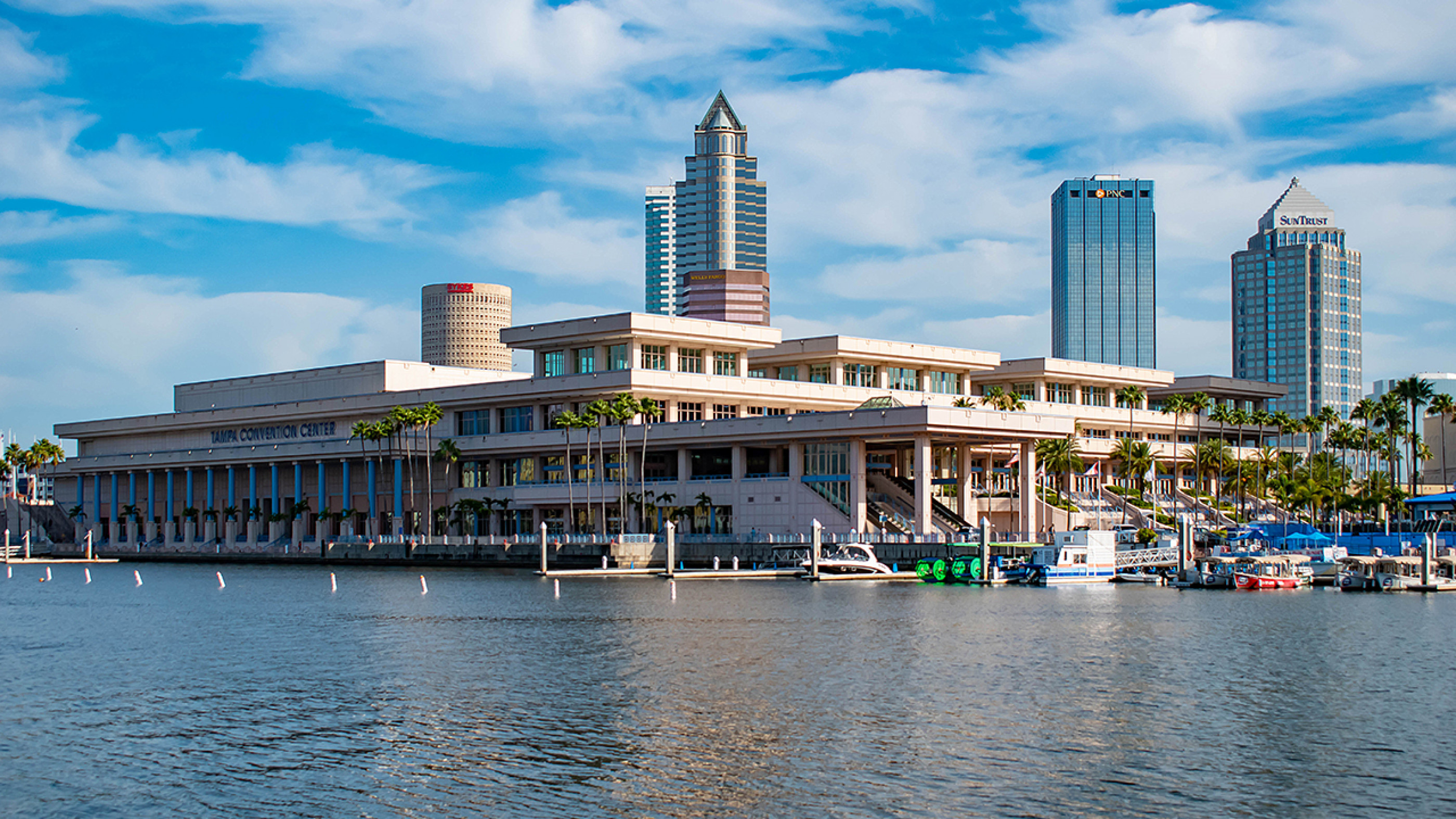
    HelloNation Staff were at the ICMA Annual Conference in Tampa, Florida. The gathering draws city and county managers, assistants, department heads, and partners in local government. It is a practical event focused on solutions that can be put to work at home.Attendees come for concentrated learning and peer exchange. Sessions typically range from leadership and budgeting to housing, infrastructure, and cybersecurity. Case studies and roundtables let managers compare results across communities of different sizes.Skill building sits at the center

    6 | HelloTampa, Florida • Fall Issue

     
    Feature Graphic
    HelloNation Staff

    ABOUT THE AUTHOR
    ICMA is the leading organization of local government professionals dedicated to creating and sustaining thriving communities throughout the world. We do this by working with our more than 13,000 members to identify and speed the adoption of leading local government practices to improve the lives of residents. ICMA offers membership, professional development programs, research, publications, data and information, technical assistance, and training to local government chief administrative offi...

    of the program. Workshops often target supervision, communications, procurement, and performance management. Many sessions feature practitioners alongside researchers, so evidence and field experience travel together.The exhibit hall provides a concentrated view of tools that cities and counties use. Technology vendors, consulting firms, insurers, and financial services firms gather in one place. Managers can see demos, ask direct questions, and hear how products fit into daily operations.Mobile and experiential learning are a consistent draw. Host city departments and regional

  • HelloTampa, Florida • Fall Issue | 7

     
    Rectangle

    How the ICMA Conference Serves Local Government Leaders

    HelloNation Staff were at the ICMA Annual Conference in Tampa, Florida. The gathering draws city and county managers, assistants, department heads, and partners in local government. It is a practical event focused on solutions that can be put to work at home.
    Attendees come for concentrated learning and peer exchange. Sessions typically range from leadership and budgeting to housing, infrastructure, and cybersecurity. Case studies and roundtables let managers compare results across communities of different sizes.
    Skill building sits at the center of the program. Workshops often target supervision, communications, procurement, and performance management. Many sessions feature practitioners alongside researchers, so evidence and field experience travel together.
    The exhibit hall provides a concentrated view of tools that cities and counties use. Technology vendors, consulting firms, insurers, and financial services firms gather in one place. Managers can see demos, ask direct questions, and hear how products fit into daily operations.
    Mobile and experiential learning are a consistent draw. Host city departments and regional partners open project sites for guided visits. Seeing a transit hub, a waterfront park, or a resilience project in person helps translate ideas into steps that work back home.
    Networking is built into each day. Morning meetups, affinity group gatherings, and evening receptions bring people together across roles and states. New managers find mentors, and experienced leaders hear fresh approaches from peers facing similar constraints.
    Tampa offers a compact, walkable base for this year’s event. The convention district connects to hotels, restaurants, and the Riverwalk, which makes it easier to keep groups together. Airports and regional highways give attendees efficient travel options from across the country.
    Education credits and ethics are part of the professional value. Sessions are designed to support continuing education goals for managers and allied professionals. Discussions of the ICMA Code of Ethics help attendees align daily decisions with shared standards.
    The host committee shapes the local flavor. Volunteers highlight regional projects, introduce community partners, and help visitors navigate the city. Their presence makes a large conference feel more personal and grounded in place.
    Programming spans the full week. General sessions set the tone with national and international perspectives on local governance. Breakouts then dive deeper into workforce, public safety, economic development, and service delivery.
    Exhibitors and sponsors add practical depth. They bring examples of asset management, permitting, data dashboards, and community engagement platforms. Managers use the time to compare costs, implementation paths, and support models before they return home.
    For readers planning a visit, the best approach is simple. Review the agenda by theme, map sessions to current priorities, and leave space for hallway conversations. ICMA’s annual conference is known for turning big ideas into workable steps for city and county teams.
    Coverage from HelloNation will follow the same practical lens. We will focus on lessons learned, tools that save time, and examples that scale from small towns to larger counties. Tampa’s setting and the collective experience of attendees make this a high-value stop on the professional calendar.

    ICMA’s annual conference is known for turning big ideas into workable steps for city and county teams.

    partners open project sites for guided visits. Seeing a transit hub, a waterfront park, or a resilience project in person helps translate ideas into steps that work back home.Networking is built into each day. Morning meetups, affinity group gatherings, and evening receptions bring people together across roles and states. New managers find mentors, and experienced leaders hear fresh approaches from peers facing similar constraints.Tampa offers a compact, walkable base for this...

    Zooming Image
  • Featured Story

    Why ELSS Matters

     
    Rectangle

    In Florida, high-rise building safety has been a major focus for decades. Many older residential towers were built before full sprinkler systems were required, leaving owners facing the challenge of meeting modern fire protection standards. Installing sprinklers throughout every space is often costly

    and difficult, especially in occupied buildings. To address this, Florida law allows an alternative known as the Engineered Life Safety System, or ELSS. This option provides a flexible, code-compliant approach that enhances life safety without requiring a complete retrofit.An ELSS is a combination

    8 | HelloTampa, Florida • Fall Issue

  • Why ELSS Matters

    In Florida, high-rise building safety has been a major focus for decades. Many older residential towers were built before full sprinkler systems were required, leaving owners facing the challenge of meeting modern fire protection standards. Installing sprinklers throughout every space is often costly and difficult, especially in occupied buildings. To address this, Florida law allows an alternative known as the Engineered Life Safety System, or ELSS. This option provides a flexible, code-compliant approach that enhances life safety without requiring a complete retrofit.

    An ELSS is a combination of systems that work together to protect occupants during a fire. Instead of relying on full sprinkler coverage, it integrates partial sprinklers, smoke detection, compartmentation, and pressurized stairwells. Each part serves a specific role in managing smoke, heat, and occupant movement. The system must be designed by a licensed fire protection engineer who evaluates the building’s structure, use, and fire risk. Local authorities review and approve each plan to ensure it meets both Florida code and the intent of national life safety standards.

    The key to ELSS success is performance-based design. Unlike prescriptive code requirements that specify exactly where every sprinkler or detector must go, performance-based design focuses on achieving safety outcomes. The engineer analyzes the building’s unique features and determines how best to meet the same level of protection as a fully sprinklered building. This method allows older structures to improve fire safety without major reconstruction or tenant displacement.

    In high-rise buildings, time is the most critical factor in an emergency. Smoke and heat can spread quickly through corridors and shafts if not controlled. ELSS designs focus on containing fire to its point of origin while maintaining safe escape routes. Pressurized stairs help prevent smoke infiltration, while compartment walls slow the spread of heat. Detection systems alert occupants and emergency responders early, allowing evacuation and fire department access to occur more efficiently.

    Florida’s approach to ELSS came after years of discussion about cost, feasibility, and safety balance. Many condominium associations faced steep expenses for full sprinkler retrofits, which can involve tearing into walls and ceilings throughout the building. By creating a performance-based alternative, the Florida Building Commission provided a path to compliance that keeps residents safe while recognizing the limits of older construction. An approved ELSS still requires rigorous design, testing, and documentation to prove that it meets state standards.

    An Engineered Life Safety System does not eliminate risk, but it ensures that critical life safety objectives are achieved even in challenging buildings.

    Designing an ELSS begins with a detailed evaluation of the building’s layout and construction type. Engineers identify potential hazards, evaluate existing fire barriers, and determine where supplemental protection is needed. Some systems may include sprinklers in corridors and common areas, while others focus on detection and communication improvements. Stair pressurization, smoke exhaust, and fire alarm integration all form part of the overall strategy. Once designed, the system must be reviewed by the local fire authority and tested to verify that it performs as intended.

    Testing is a crucial step in the process. Each component must respond correctly during an emergency scenario. Fans must activate to maintain pressure, doors must resist smoke migration, and alarms must trigger in the right sequence. These tests are observed and documented to confirm compliance. In some cases, engineers perform smoke modeling to visualize how air will move through the building during a fire. This data helps verify that the system provides adequate protection for occupants at all floors.

    Maintenance is another important responsibility for owners. Like any life safety system, ELSS components require periodic inspection and servicing. Pressurization fans, smoke detectors, and alarms must be tested regularly to confirm proper operation. Changes to the building, such as interior renovations or new materials, can alter system performance. Regular assessments ensure that safety remains consistent and that the system continues to meet the intent of the code.

    While ELSS provides flexibility, it is not a shortcut. The approval process demands thorough documentation, including design drawings, calculations, and maintenance plans. Engineers must show that the system’s combined performance equals or exceeds that of a traditional sprinkler installation. Local officials review each submission carefully and may require additional testing before final approval. For building owners, this process ensures accountability and transparency while keeping costs more manageable than a complete retrofit.

    The Engineered Life Safety System represents a practical balance between modern safety standards and the realities of older construction. It allows owners to upgrade protection without overwhelming financial strain, while ensuring that occupants receive a level of safety appropriate for high-rise living. For Florida’s aging building stock, ELSS has become a valuable tool for meeting code and improving confidence in fire protection performance.

    Florida’s building environment continues to evolve, but the principles behind ELSS remain clear. Fire protection must always adapt to building type, occupancy, and available technology. Through careful design, testing, and maintenance, ELSS provides a path forward for existing structures that cannot easily accommodate full sprinkler systems yet still require dependable life safety protection.

    Feature Graphic
    Jeff Marcic
     

    of systems that work together to protect occupants during a fire. Instead of relying on full sprinkler coverage, it integrates partial sprinklers, smoke detection, compartmentation, and pressurized stairwells. Each part serves a specific role in managing smoke, heat, and occupant movement. The system must be designed

    by a licensed fire protection engineer who evaluates the building’s structure, use, and fire risk. Local authorities review and approve each plan to ensure it meets both Florida code and the intent of national life safety standards.The key to ELSS success is performance-based design. Unlike prescriptive code requirements that specify exactly where every sprinkler or detector must go, performance-based design focuses on achieving safety outcomes. The engineer analyzes the building’s unique features and determines how best to meet the same level of protection as a fully sprinklered building. This method allows older structures to...

    Rectangle

    An Engineered Life Safety System does not eliminate risk, but it ensures that critical life safety objectives are achieved even in c...

    About the Author

    Jeff Marcic is a Principal at EB Life Safety, leading life safety and fire protection consulting projects. With expertise in compliance management, system design, and high-rise coordination, he brings strategic insight and practical experience to the development of effective life safety solutions.

    HelloTampa, Florida • Fall Issue | 9

  • Partners & Associations
    The HelloNation Network
    Partners &
    Associations
    HelloNation is America’s Video Magazine, telling the story of more than 30,000 towns and cities. We don’t do it alone. From national civic leaders to the statewide associations rooted right here in Florida, these partners help make every community visible — and every local voice heard.
    “Where Good News Travels Faster.”
    Association categories
    National
  • National Partner
    National
    U.S. Conference of Mayors

    224 | HelloTampa, Florida • Fall Issue

    U.S. Conference of Mayors

    Every city has its own personality — its own traffic headaches, its own budget fights, its own hopes for the next generation. But the mayors who run those cities, from the biggest metros to mid-sized towns, share more problems than you might expect. For nearly a century, they've had one place to solve them together: the United States Conference of Mayors — an organization HelloNation is proud to partner with. The Conference was born in the depths of the Great Depression. In 1932, with cities near bankruptcy and unemployment lines stretching around the block, Detroit's mayor invited his counterparts from across the country to confront the crisis as one. Twenty-nine mayors answered the call, traveled to Washington together, and helped win the first federal relief ever sent directly to America's cities. They formalized their alliance soon after, and the Conference has been the nation's leading voice for cities ever since. Today it's the official nonpartisan organization of U.S. cities with populations of 30,000 or more — roughly 1,400 of them — each represented by its mayor. Democrats, Republicans, and independents sit at the same table, because potholes, public safety, and housing costs don't belong to any one party. The Conference's job is to make sure that when Washington writes laws and budgets, the people who actually run America's cities are in the room. Why should that matter to you? Because the issues the Conference weighs in on land squarely in your daily life. When mayors press Congress on infrastructure, they're talking about the roads you drive and the water you drink. When they publish their annual survey on hunger and homelessness, they're putting hard local data behind problems you see in your own community. And when they share what's working in one city — a smarter transit idea, a program that got families housed — that idea can travel to yours. The Conference is, in effect, a clearinghouse for the best ideas in American local government, plus a megaphone to make sure cities aren't forgotten when federal priorities are set. It has been on the front lines of history, too. President Kennedy chose the Conference's annual meeting to introduce the ideas that would become the Civil Rights Act. Decade after decade, on issues from economic recovery to public safety, the nation's mayors have used this forum to lead. For a resident, the Conference is a reminder that your mayor isn't working in isolation. Behind that one local leader stands a national network of peers, all trading solutions and pushing to bring resources home. And the closer that leadership and help sit to your community, the stronger that community becomes — which is exactly why the work of America's mayors, together, is worth paying attention to.
  • Partners & Associations
    National
    National Partner
    The Room Where America's Mayors Get Things Done
    Founded
    1932
    Cities
    1,400
    Headquarters
    Washington, D.C.

    Every city has its own personality — its own traffic headaches, its own budget fights, its own hopes for the next generation. But the mayors who run those cities, from the biggest metros to mid-sized towns, share more problems than you might expect. For nearly a century, they've had one place to solve them together: the United States Conference of Mayors — an organization HelloNation is proud to partner with.

    The Conference was born in the depths of the Great Depression. In 1932, with cities near bankruptcy and unemployment lines stretching around the block, Detroit's mayor invited his counterparts from

    across the country to confront the crisis as one. Twenty-nine mayors answered the call, traveled to Washington together, and helped win the first federal relief ever sent directly to America's cities. They formalized their alliance soon after, and the Conference has been the nation's leading voice for cities ever since.

    Today it's the official nonpartisan organization of U.S. cities with populations of 30,000 or more — roughly 1,400 of them — each represented by its mayor. Democrats, Republicans, and independents sit at the same table, because potholes, public safety, and housing costs...

    “Great cities are built one good decision at a time, by leaders who know their neighbors by name.”
    In partnership with HelloNation • Visit USCM

    HelloTampa, Florida • Fall Issue | 225

  • National Partner
    National
    National Partner
    National League of Cities

    Cities, towns, and villages are where life actually happens — where you go to work, raise a family, and count on someone to plow the street and keep downtown's lights on. The people who lead those places, from big-city mayors to small-town council members, have spent a hundred years pooling their wisdom through one organization: the National League of Cities — a partner HelloNation is proud to work alongside.

    Its story began on a December morning in 1924, when ten state municipal leagues gathered in a classroom at the University of Kansas. Their goal was simple but ambitious: create a single national...

    Founded
    1924
    Cities
    19,000+
    Headquarters
    Washington, D.C.

    226 | HelloTampa, Florida • Fall Issue

  • “
    These influential entities advocate tirelessly on behalf of America's cities, towns and villages — ensuring every community's voice is heard on a national scale.”
    In partnership with HelloNation • Visit NLC

    HelloTampa, Florida • Fall Issue | 227

    National League of Cities

    Cities, towns, and villages are where life actually happens — where you go to work, raise a family, and count on someone to plow the street and keep downtown's lights on. The people who lead those places, from big-city mayors to small-town council members, have spent a hundred years pooling their wisdom through one organization: the National League of Cities — a partner HelloNation is proud to work alongside.

    Its story began on a December morning in 1924, when ten state municipal leagues gathered in a classroom at the University of Kansas. Their goal was simple but ambitious: create a single national organization where local leaders could swap ideas, learn from one another, and speak with one voice in Washington. That small meeting grew into the oldest and largest organization representing America's municipalities. Today the National League of Cities represents more than 19,000 cities, towns, and villages — from the largest metropolis to the smallest hamlet — through its direct members and partnerships with state municipal leagues across the country.

    The League's mission is to advocate for local governments, strengthen local leadership, and spread solutions that work. It lobbies Congress on the issues that shape communities — infrastructure, housing, public safety, families — guided by a principle every local official appreciates: no unfunded mandates, and respect for local decision-making. It also trains elected leaders, publishes research, and helps cities of every size tap federal resources, like the infrastructure funding that repairs bridges and upgrades water systems.

    Why does this matter to you?

    Because the League exists to make sure your town — whatever its size — isn't drowned out. A village of a few thousand people can't station a lobbyist in Washington, but through the National League of Cities, its voice still reaches the national conversation. And when your city council runs into a hard problem, odds are another community has already found a solution worth borrowing; the League is how those lessons travel. Its programs focused on children, youth, and families work to improve outcomes for the next generation right where they live.

    In short, the League helps your local leaders do their jobs better — and helps ensure that decisions made far away still account for life in your neighborhood.

    A hundred years after ten people sat down around a table in Kansas, the through-line hasn't changed: local leaders are the ones who get things done, and they're strongest when they work together. That's a quietly hopeful idea, and it holds up whether you live in a city of millions or a town with a single stoplight.

  • National Partner
    National
    National Partner
    National Association of Counties

    Chances are you can name your mayor, and maybe your governor. But can you name a single thing your county government does? If not, you're in good company — and you're also relying on it more than you realize. The county is the quiet layer of American government that maintains the roads, staffs the health department, keeps the courthouse open, and shows up when disaster strikes. And for ninety years, America's counties have had a national champion: the National Association of Counties, a national organization HelloNation is proud to partner with.

    NACo was founded in 1935, during the upheaval of the New Deal,...

    Founded
    1935
    Counties
    3,000+
    Headquarters
    Washington, D.C.

    228 | HelloTampa, Florida • Fall Issue

  • “
    Counties are where policy meets people — and HelloNation helps tell that story town by town.”
    In partnership with HelloNation • Visit NACo

    HelloTampa, Florida • Fall Issue | 229

    National Association of Counties

    Chances are you can name your mayor, and maybe your governor. But can you name a single thing your county government does? If not, you're in good company — and you're also relying on it more than you realize. The county is the quiet layer of American government that maintains the roads, staffs the health department, keeps the courthouse open, and shows up when disaster strikes. And for ninety years, America's counties have had a national champion: the National Association of Counties, a national organization HelloNation is proud to partner with.

    NACo was founded in 1935, during the upheaval of the New Deal, when county officials realized that a form of government older than the states themselves risked being overlooked as Washington expanded. They organized to make sure counties had a seat at the national table. Today NACo is the only national organization representing county governments — all 3,069 of them — serving nearly 40,000 elected county officials and the 3.6 million people who work for county governments across the country.

    What do counties actually do? More than most people imagine. Counties own more road miles than any other level of government — over 1.8 million of them — plus tens of thousands of bridges. They run public health departments, emergency management, jails and courts, and, in most of the country, elections. When you vote, call 911, cross a county bridge, or visit a public clinic, you're using county government.

    NACo's role is to strengthen all of that. It advocates for counties in federal policymaking, researches and spreads solutions that work, helps counties save taxpayer money through shared purchasing, and develops local leaders. When a good idea takes root in one county — a mental-health crisis center, a smarter way to invest opioid-settlement dollars — NACo helps carry it to counties nationwide.

    Why does that matter to you?

    Because counties deliver the services you're most likely to need — on your worst day and your most ordinary one alike — and they often do it with tight budgets and little fanfare. When counties have a strong national voice, they're better equipped to keep your roads safe, your water clean, your emergency services staffed, and your elections running. NACo's work happens far from most residents' attention, but its results show up in your community every single day.

    There's history in it, too. What began in 1935 as a small band of county officers fighting to be taken seriously has grown into a nearly century-old institution — proof of how much steady, unglamorous local government matters to the country, and to the people it quietly serves every day. The next time your county keeps a road open, staffs a clinic, or runs an election without a hitch, know that a national network stands behind that work, helping make sure it holds.

  • National Partner
    National
    U.S. First Responders Association

    230 | HelloTampa, Florida • Fall Issue

    U.S. First Responders Association

    When the worst moment of your life arrives — a fire, a crash, a medical emergency, a natural disaster — the people who show up are first responders. Firefighters, police officers, paramedics, rescue crews, 911 dispatchers, and the volunteers who back them up run toward the trouble everyone else is running from. The U.S. First Responders Association exists to support the people who do that job.

    USFRA is a national nonprofit that brings together first responders from across every discipline — fire, EMS, law enforcement, dispatch, and military, along with veterans and civilian volunteers — into a single professional and social network. It describes itself as the only national nonprofit that embraces all aspects of first (and secondary) response, and its focus is practical: training, tactics, safety, education, disaster preparation, and community outreach. In plain terms, it helps the people who protect your community share what they know, stay safer on the job, and prepare for the emergencies they hope never come.

    The association's reach shows up when it matters most. Over the years, USFRA has helped channel support to responders on the front lines of catastrophe — organizing disaster relief after hurricanes battered the Florida panhandle, backing crews battling wildfires in Southern California, and getting needed supplies to responders in the field. It also works to strengthen the bond between first responders and the communities and local businesses that stand behind them, connecting the people who serve with the neighbors who want to support them. That spirit carries into new efforts to honor responders publicly, including a national awards show, launched with broadcast partners, created to celebrate the people behind the badge and the uniform.

    Why does that matter to you?

    Because the quality of the help you receive in an emergency depends on how well-trained, well-supported, and well-connected your local responders are. A firefighter with access to the latest safety practices, a dispatcher plugged into a national network of peers, a volunteer department that got help preparing for disaster — all of that translates directly into better outcomes for you and your family when seconds count. Supporting first responders isn't abstract; it's an investment in your own community's safety.

    There's a human side, too. First responders carry heavy burdens, and organizations that build fellowship, share resources, and remind them they aren't alone are part of keeping them whole — which, in turn, keeps them ready to serve.

    That shared commitment to safe, connected communities is why HelloNation is proud to work alongside the U.S. First Responders Association. The men and women who protect our neighborhoods deserve to be recognized and supported by the communities they serve — and we're glad to help tell their story.

  • Partners & Associations
    National
    National Partner
    The People Who Run Toward Trouble — and the Network Behind Them

    When the worst moment of your life arrives — a fire, a crash, a medical emergency, a natural disaster — the people who show up are first responders. Firefighters, police officers, paramedics, rescue crews, 911 dispatchers, and the volunteers who back them up run toward the trouble everyone else is running from. The U.S. First Responders Association exists to support the people who do that job.

    USFRA is a national nonprofit that brings together first responders from across every discipline — fire, EMS, law enforcement, dispatch, and military, along with veterans and civilian volunteers — into a single

    professional and social network. It describes itself as the only national nonprofit that embraces all aspects of first (and secondary) response, and its focus is practical: training, tactics, safety, education, disaster preparation, and community outreach. In plain terms, it helps the people who protect your community share what they know, stay safer on the job, and prepare for the emergencies they hope never come.

    The association's reach shows up when it matters most. Over the years, USFRA has helped channel support to responders on the front lines of catastrophe — organizing disaster...

    “When the worst moment of your life arrives — a fire, a crash, a medical emergency, a natural disaster — the people who show up are first responders.”
    In partnership with HelloNation • Visit USFRA

    HelloTampa, Florida • Fall Issue | 231

  • Rectangle

    © HelloNation.

    All Rights Reserved